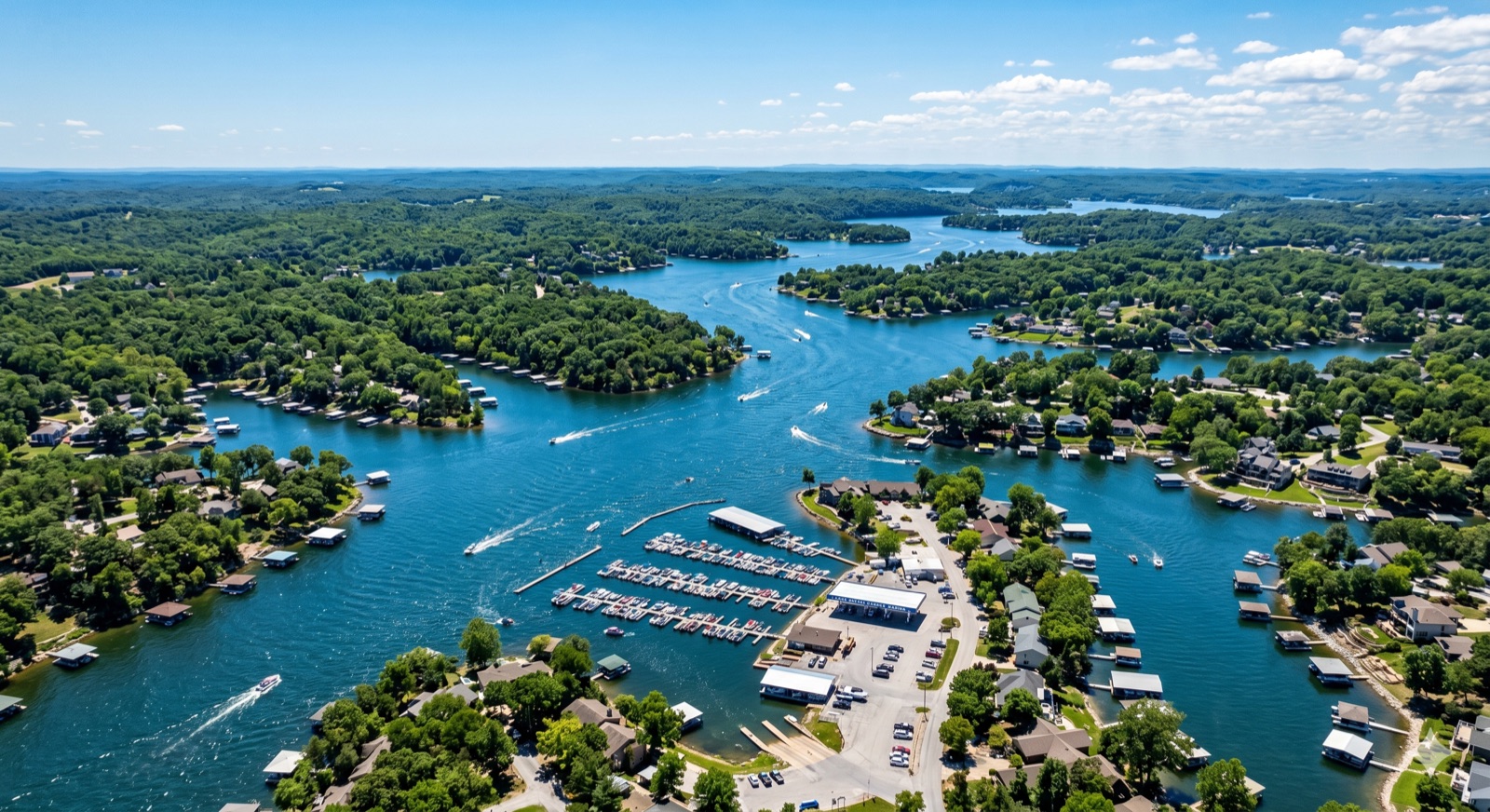
Lake of the Ozarks Dock Permits & Shoreline Rules
Most dock, breakwater, seawall, rip rap, and shoreline projects at Lake of the Ozarks start with Ameren Missouri. This guide explains which projects usually need approval, what documents matter, what fees to plan for, and where homeowners lose time.
The short version
Lake of the Ozarks is different from many lakes because Ameren Missouri manages shoreline permits under the lake's hydropower and shoreline-management framework. The practical rule is simple: if your project changes a dock, adds a dock, stabilizes a bank, installs a breakwater, excavates, builds a boat ramp, or affects project lands, confirm the permit path before crews start work.
The highest-risk projects are new docks, dock modifications, reconfigured slips, breakwaters, seawalls, rip rap, and excavation. Basic maintenance may be simpler, but the line between repair and modification can get expensive if it is guessed wrong.
What Ameren considers during permit review
Ameren reviews applications for completeness and for fit with shoreline-management guidelines. For boat docks, the review looks at the proposed location, property boundaries, nearby docks, the cove or channel, and navigation impact. For other shoreline facilities, Ameren may consider erosion, elevation, project boundary location, and impact on project resources.
That is why a clean site visit matters. Before drawings are submitted, the contractor should understand the lot lines extended lakeward, neighboring dock locations, distance across the cove, existing shoreline condition, water depth, and whether the work can be completed inside the permitted footprint.
Projects that commonly need Ameren approval
| Project | Why it matters | Start here |
|---|---|---|
| New dock construction | Dock location, size, navigation clearance, and neighboring docks all matter. | Dock construction |
| Dock modification | Changing a slip, roof, footprint, or flotation can move a repair into modification territory. | Dock repair |
| Breakwater installation | Breakwaters are a separate permit category and are common on exposed main-channel docks. | Breakwater installation |
| Seawall or bank stabilization | Ameren lists seawall, riprap, stacked stone, and vegetation under bank stabilization permits. | Seawall construction |
| Rip rap installation | Stone size, toe placement, slope, access, and shoreline length affect the project design. | Rip rap installation |
| Boat lift work | Lift work is easiest when the existing dock footprint and electrical condition are understood. | Boat lift repair |
Documents and measurements that keep a permit moving
Ameren's public instructions call for scaled drawings and project-location details. For dock applications, homeowners should expect to document the proposed dock location in relation to docks on both sides and across the cove or channel, the distance to property lines extended lakeward, the distance to the center of the cove or channel, the full channel or cove width, the distance to neighboring docks, and the dimensions of the proposed dock.
For bank stabilization, Ameren calls out details like the lowest elevation of the proposed activity, distance from the toe of the bank to the seawall, and wall height. In plain English: measurements matter, and they need to be gathered before the application goes in.
Current fee categories to plan for
Ameren's current public permit page lists fee categories for dock permits, certified dock builder applications and annuals, bank stabilization, dredging, boat ramps, permit extensions, transfers, utilities, breakwaters, FERC submittals, piers, steps, and enforcement. The most relevant homeowner planning numbers currently listed include:
- New dock or modification: $550
- Certified dock builder application: $300
- Certified dock builder annual: $100
- Bank stabilization: $300 for the first 100 feet plus $1 per foot over 100 feet
- Breakwater: $1,000
- Permit extension: $50
- Permit transfer: $100
- Failure to obtain a permit: $2,000 enforcement fee
- Failure to comply with permit conditions: $2,000 enforcement fee
Fees can change, and special project conditions can add requirements. Use these numbers for early budgeting, then confirm against Ameren's current permit page before filing.
Timeline and expiration rules
Ameren states that new dock and breakwater construction, plus approved modifications to existing docks and breakwaters, must be completed within one year from permit issuance. If the work is not complete within the permit term, the permittee may apply for one six-month extension, provided the project details still match the original application and the dock complies with current guidelines.
Ameren lists a two-year completion window for other activities such as bank stabilization, piers, and excavation. Extensions are not available for those categories. If a permit expires, Ameren says a new application, new fees, and a new permit are required.
Common reasons Lake projects stall
- Starting before approval. Ameren says construction may not proceed until a permit has been issued.
- Missing measurements. Dock applications need distances to property lines, neighboring docks, and the cove or channel.
- Wrong permit holder. Ameren warns builders and Realtors to take care when applying so the client's permits do not end up under the wrong holder.
- Unmarked project boundary. Ameren recommends marking the project boundary before planning and requires it before applying for bank stabilization.
- Ignoring transfer requirements. Property transfers can require permit transfer steps and electrical inspection where applicable.
What to do before you spend money
Start with a site visit. A good contractor should inspect the dock or shoreline, identify the likely permit category, confirm whether the work is repair or modification, and explain the drawing package needed before the application is filed. For larger main-channel exposure, ask directly whether breakwater installation or rip rap should be part of the plan instead of repairing the same damage every season.
Ozark Lake Dock offers free site visits across Camden, Miller, Morgan, and Benton counties. We will walk the shoreline, review the dock or bank condition, and give you a written recommendation before work starts.